Box Turtle Care: The Complete Guide for Beginners
box turtlescare guidesbeginners
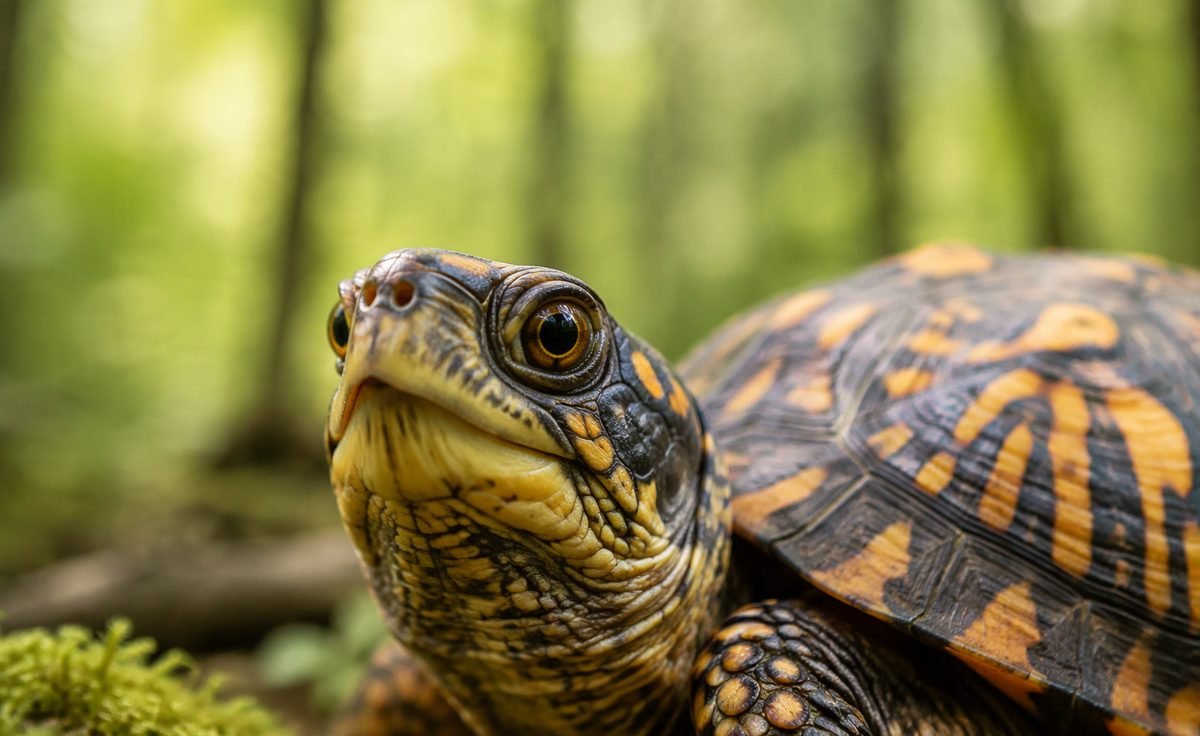
Box turtles (genus Terrapene) are among the most rewarding reptiles to keep in North America — and among the most misunderstood. They can outlive their owners, they’re escape artists, and they suffer quietly in improper setups. This guide covers what actually matters.
Quick Facts
- Lifespan: 40–100+ years with proper care
- Adult size: 4–7 inches depending on species
- Enclosure: minimum 4 ft × 2 ft for one adult indoors; larger is always better
- Temperature: 75–85°F ambient, 85–90°F basking spot
- Humidity: 60–80% (most species)
- Diet: omnivore — roughly half animal protein, half plant matter
Know Your Species First
“Box turtle” covers several species with different needs:
- Eastern box turtle (T. carolina): the classic; high humidity, forest-edge habitat
- Ornate box turtle (T. ornata): more arid grasslands; lower humidity
- Three-toed box turtle (T. triunguis): docile, intermediate humidity
- Gulf Coast box turtle (T. major): largest, highest humidity
Most care failures come from applying generic advice to the wrong species. Identify yours before setting up.
Enclosure: Outdoor Is Best
A secure outdoor pen is the gold standard for most of the year:
- Size: at least 4 ft × 4 ft for one adult, bigger for multiples
- Security: box turtles dig and climb. Bury hardware cloth 10–12 inches deep around the perimeter and angle the top inward
- Microclimates: a shaded area, a sunny basking area, a humid hide, and a shallow water dish deep enough to soak in
- Drainage: these are semi-aquatic animals — mud is fine, standing swamp is not
Indoors, use a tortoise table or large stock tub rather than a glass aquarium (poor ventilation, stressful reflections). A 4 ft × 2 ft footprint is the practical minimum for one adult.
Heat and UVB Lighting
Box turtles are diurnal and need real light:
- Heat gradient: 75–85°F ambient with an 85–90°F basking spot; night temps can drop to 65–70°F
- UVB: a linear T5 HO UVB tube (5.0–10.0 depending on distance) running most of the enclosure, replaced every 6–12 months — UV output degrades before the bulb visibly dims
- Indoors, UVB is non-negotiable. Without it, metabolic bone disease is a matter of when, not if
Humidity and Substrate
Most box turtles need 60–80% humidity, maintained through the substrate rather than misting the air:
- Use 4+ inches of a moisture-holding mix: organic topsoil + cypress mulch is the reliable staple
- Add a humid hide (a cave or half-log packed with damp sphagnum moss)
- Ornate box turtles need it noticeably drier — again, species matters
Diet: The 50/50 Omnivore
Box turtles are true omnivores, and variety is the whole game:
- Animal protein (~50%): earthworms, snails, slugs, crickets, roaches, mealworms in moderation, occasional pinky mice
- Plants (~50%): dark leafy greens (collard, dandelion, turnip greens), squash, peppers, mushrooms
- Fruit: berries and melon as an occasional treat only — sugar is not their friend
- Avoid: dog/cat food as a staple, iceberg lettuce, excess spinach, avocado
Dust food with calcium powder several times a week; a multivitamin once a week. Gut-load feeder insects where possible. Always provide a shallow water dish and soak adults weekly.
Hibernation (Brumation)
Healthy, well-conditioned adults of temperate species brumate naturally — but it’s the single riskiest part of box turtle keeping:
- Never brumate a sick, underweight, or recently acquired animal
- Stop feeding 2–3 weeks before cooling so the gut is empty
- Typical parameters: 40–50°F, high humidity, around 3 months
- A pre-brumation vet check with a fecal exam is strongly recommended
When in doubt, keep them active over winter with full lighting and heat.
Health Red Flags
See a reptile vet promptly for:
- Soft spots, white patches, or pitting on the shell (shell rot)
- Swollen, sunken, or closed eyes
- Bubbling or clicking breathing, open-mouth breathing
- Refusing food for weeks in a healthy-looking animal
Buying Legally and Ethically
Wild box turtle populations are declining across North America, and many states restrict or ban collecting and selling wild-caught animals. When buying:
- Insist on captive-bred with documentation
- Check your state’s regulations before acquiring anything
- Never release a pet box turtle into the wild — it harms native populations and usually kills the animal
A responsibly sourced, properly kept box turtle is a decades-long companion. Take the setup seriously on day one and this species will reward you enormously.
Next up: what box turtles actually eat, and how to build their enclosure.