What Do Box Turtles Eat? A Complete Diet Guide
box turtlesdietfeeding
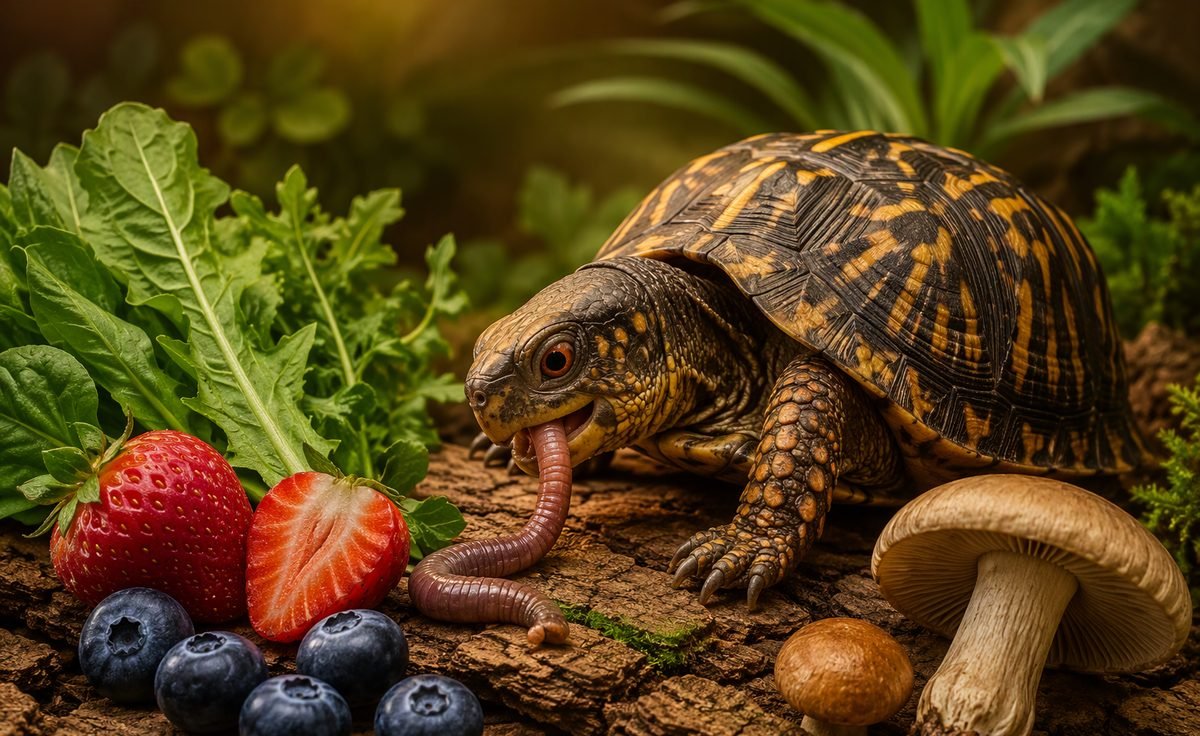
Feeding is where most box turtle keepers slip up — usually by offering too little variety and too much fruit. Here’s a practical framework.
The Core Principle: Variety, 50/50
A wild box turtle wanders, grazing and hunting across a huge variety of foods. In captivity you must reproduce that variety yourself. Aim for roughly half animal protein, half plant matter, rotating items constantly.
Animal Protein (About Half the Diet)
Best staples:
- Earthworms — arguably the single best box turtle food; most turtles go crazy for them
- Snails and slugs (pesticide-free, from a safe source)
- Crickets, dubia roaches, silkworms — gut-loaded where possible
- Mealworms/superworms — fine as part of the mix, not the whole diet (high chitin, high fat)
- Occasional pinkie mice or cooked egg for adults
Vegetables and Greens (About Half the Diet)
Rotate freely:
- Dark leafy greens: collard, mustard and turnip greens, dandelion greens, endive, escarole
- Squash (summer and winter), bell peppers, green beans
- Edible mushrooms, flowers like hibiscus and dandelion
Fruit — berries, melon, apple, papaya — should be an occasional treat only, roughly 5–10% of the total diet.
Foods to Avoid
- Avocado (toxic)
- Onion and garlic in quantity
- Iceberg lettuce (no nutrition)
- Excessive spinach/beet greens (oxalates block calcium)
- Dog or cat food as a staple (wrong nutrient balance, too much fat)
- Anything processed, salty, or seasoned
By Age
- Hatchlings and juveniles: more animal protein (60–70%) to fuel growth; smaller, daily meals
- Adults: the 50/50 split; feed a large meal every other day or modest daily portions
Supplements and Water
- Dust food with plain calcium powder (without D3 if UVB is adequate) 3–4 times per week
- Multivitamin once per week
- Fresh water daily in a dish shallow enough to climb out of; soak adults weekly to support hydration
A turtle fed this way rarely needs veterinary dental or metabolic intervention. Pair good diet with proper UVB and heat and you’ve covered 90% of box turtle health.