Box Turtle Enclosure Setup: Indoor vs Outdoor Compared
box turtlesenclosuresetup
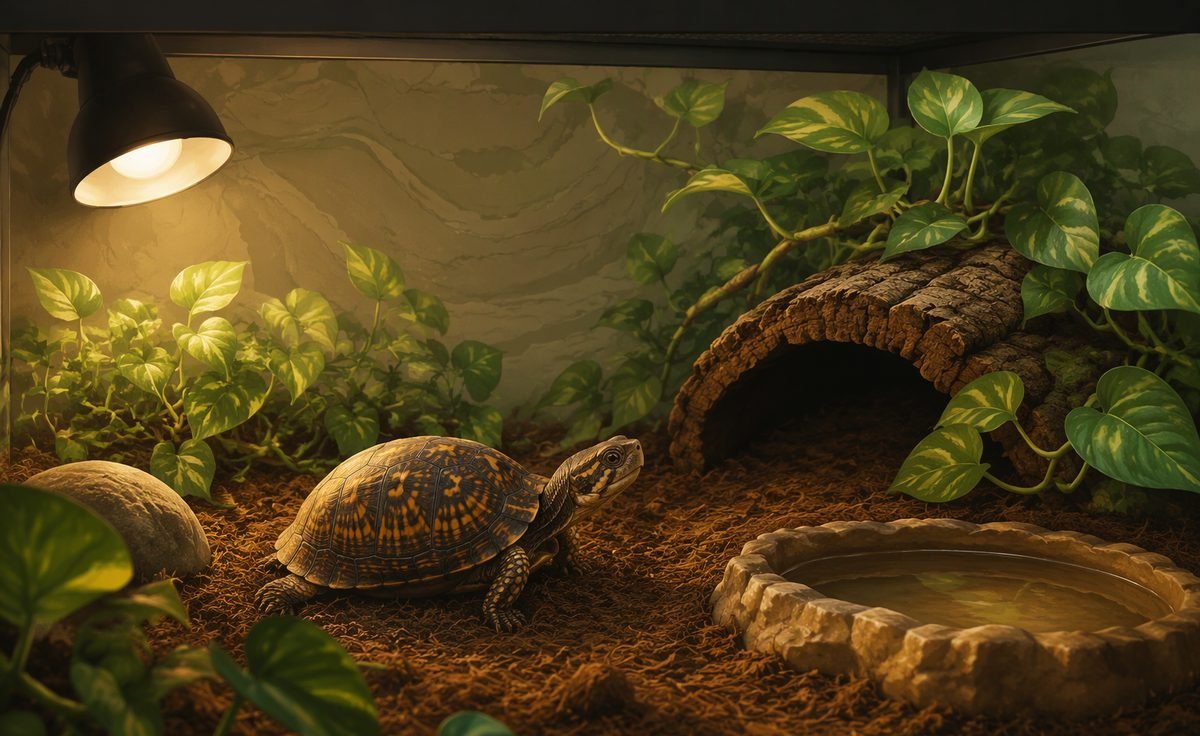
The single biggest factor in box turtle health is the enclosure. Get this right and most other problems never appear.
Outdoor Pen: The Gold Standard
If your climate allows it, a secure outdoor pen gives your turtle natural UVB, weather gradients, and room to behave like a turtle.
Minimum specs for one adult:
- Footprint: 4 ft × 4 ft absolute minimum; 8 ft × 4 ft is genuinely better
- Walls: solid or wire at least 12–16 inches tall — box turtles climb surprisingly well
- Dig-proofing: bury hardware cloth 10–12 inches deep along the entire perimeter
- Microclimates: one sunny basking area, one deep shade area, one humid hide (a cave packed with damp moss), one dry hide, and a water dish deep enough to soak in
- Plants: plant grass, clover, hostas, and berry canes around the edges — grazing opportunities and cover
- Drainage: slope the base slightly; turtles tolerate mud but not permanent standing water
Indoor Setup: Tortoise Table Over Aquarium
Glass aquariums are the default at pet stores and a poor default: poor ventilation, wrong humidity behavior, and the transparent walls stress many turtles.
Better options:
- Tortoise table: an open-topped wooden or PVC box, minimum 4 ft × 2 ft for one adult
- Stock tub: large opaque plastic trough; cheap, easy to humidify, easy to clean
Indoor requirements:
- Substrate: 4+ inches of topsoil/cypress mulch mix — depth lets them burrow, which regulates humidity and security
- Heat: a basking lamp at one end creating an 85–90°F hotspot; 75–85°F ambient
- UVB: a T5 HO linear tube spanning most of the enclosure — not a compact coil bulb
- Humidity: aim 60–80% via damp substrate and a humid hide; misting alone evaporates in minutes
- Water: shallow soaking dish, refreshed daily
Indoor vs Outdoor at a Glance
| Factor | Outdoor Pen | Indoor Setup |
|---|---|---|
| UVB | Free, natural | Must buy and replace bulbs |
| Humidity | Self-regulating | Requires effort |
| Security | Needs dig/climb proofing | Escape risk near zero |
| Cost | Higher upfront | Lower upfront |
| Season | Climate-dependent | Year-round |
Many keepers run both: outdoors in warm months, a proper indoor table for winter or extremes. Whichever you choose, the non-negotiables are the same: deep substrate, real UVB, a heat gradient, hiding spots, and a soaking dish.